


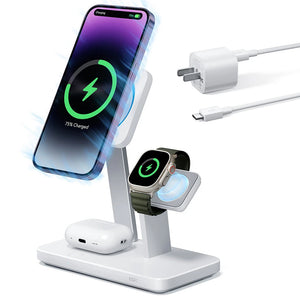


ESR 2026 Wireless Phone Chargers Collection
Pro-Level Power That Protects Your Battery


Portable AirPods, Apple Watch, Android, and iPhone Wireless Chargers — Qi2 25W, MagSafe & 3-in-1 Fast Charging
Stay powered up with ESR's range of wireless chargers, including car chargers, power banks, Qi2 portable power charging stations, foldable travel charger,wireless charging pads and MagSafe charger stands. Compatible with both Apple and Samsung devices, our Phone、Apple Watch 、AirPods chargers use Qi2 and MagSafe technology for fast, convenient wireless charging wherever life takes you.








How fast is wireless charging?
It depends on two things: what standard your charger supports, and what your phone can actually handle.
Most budget wireless chargers are Qi — that's 7.5W on iPhone, around 10W on Samsung. It works, but it's slow, and the speed tends to drop when your phone gets warm. If you've ever had a wireless charger that felt sluggish after 20 minutes, that's usually why.
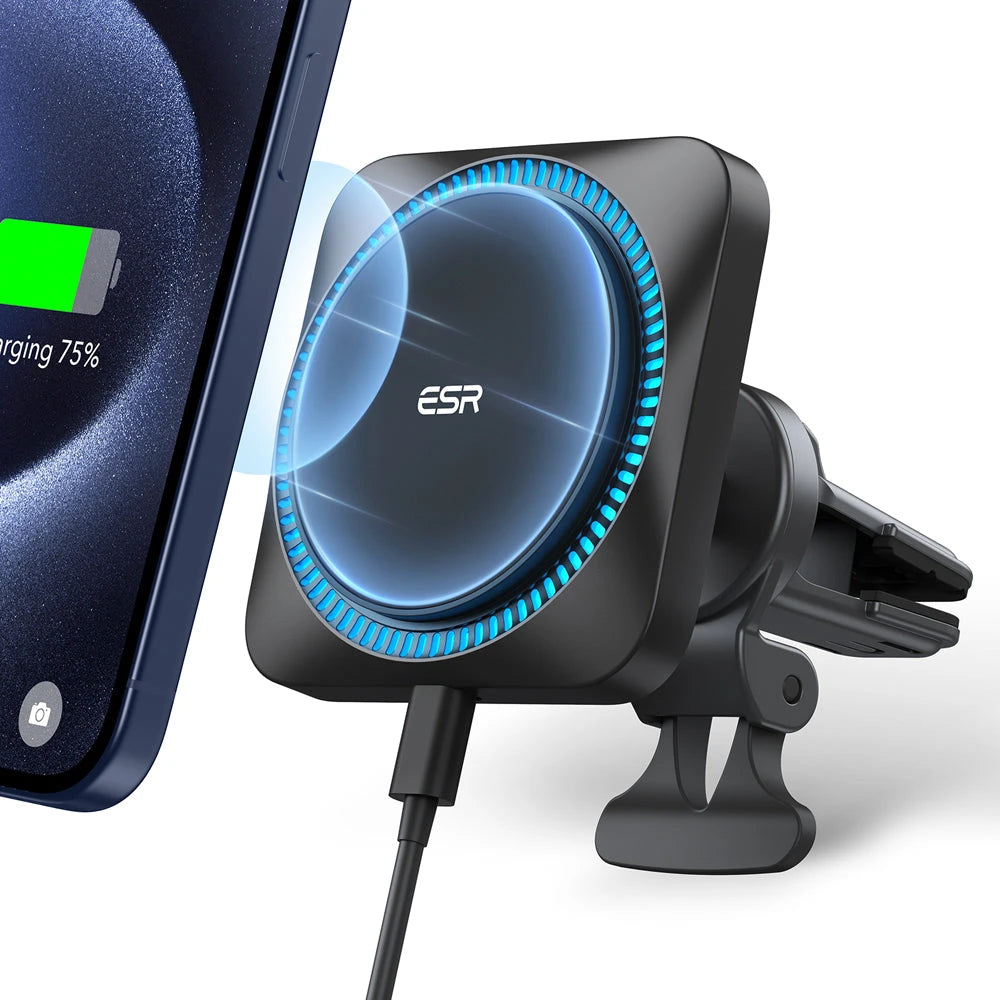
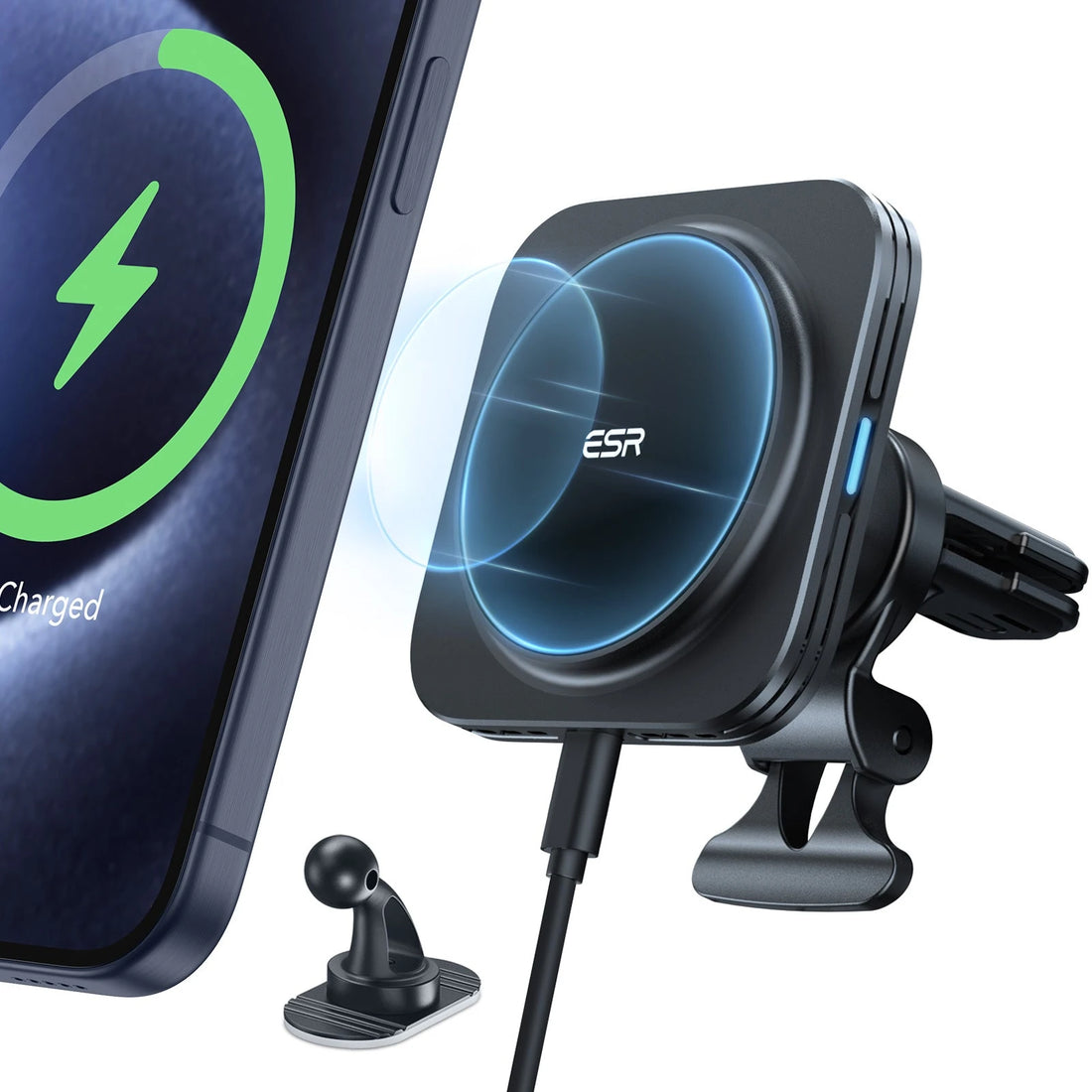
Qi2 brought the ceiling to 15W and made that speed more consistent, because the magnetic alignment keeps the coil properly positioned instead of drifting. That's what ESR's HaloLock chargers are built around — you get 15W reliably, not 15W in ideal conditions only.
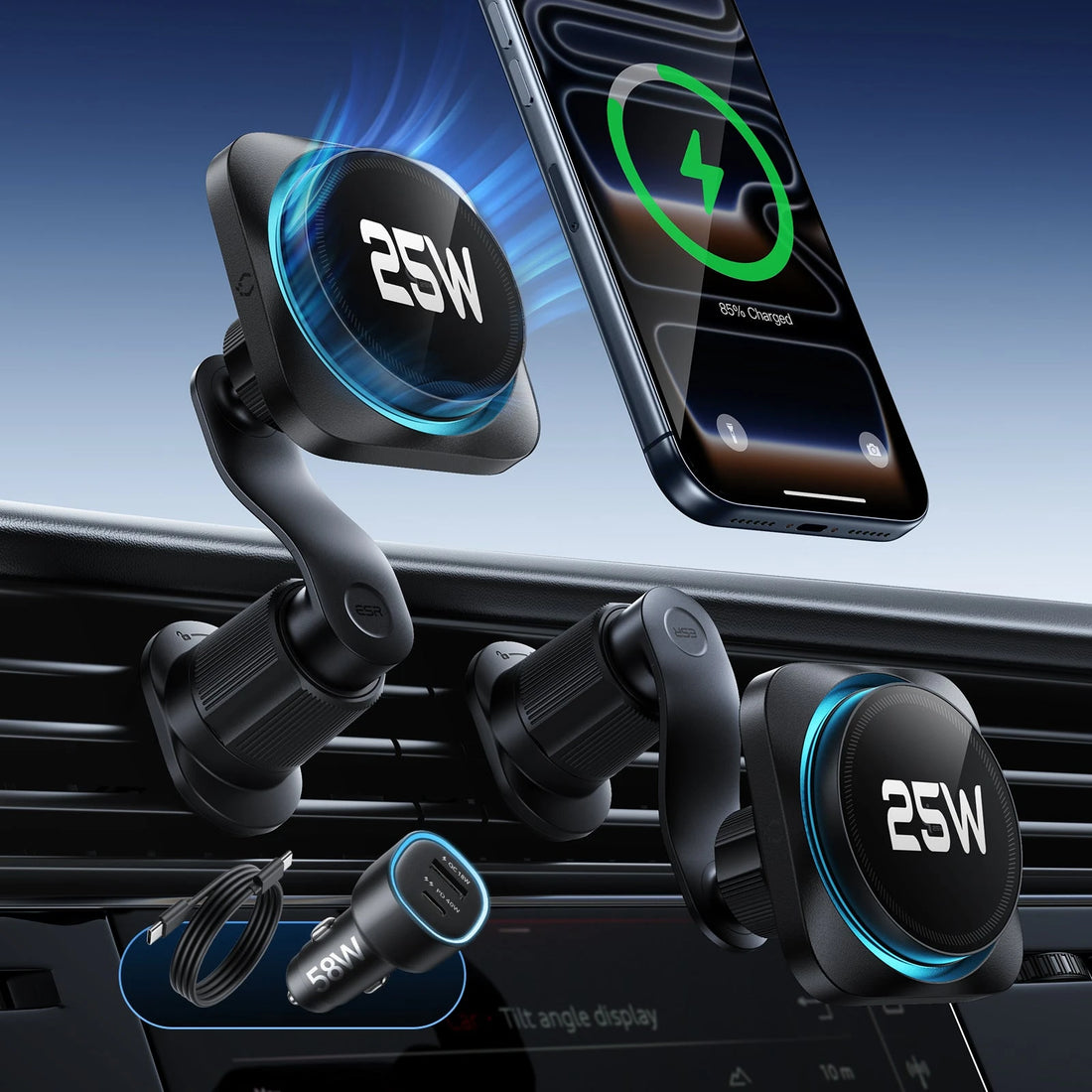
Qi2 25W (Qi2.2) is the current top standard. iPhone 16 and later support up to 25W wirelessly, and Galaxy S26 Ultra does too. iPhone Air caps at 20W. The catch with 25W is heat — charging that fast generates more warmth, which causes phones to throttle back to protect the battery. That's the reason ESR built the active cooling fan into the CryoBoost line. The fan keeps the phone's surface temperature lower, which means the phone doesn't throttle early, and you actually see the full speed sustained through the whole charge.
One thing to watch: the charger's rated wattage only matters if your wall adapter can match it. A 25W charging pad connected to an 18W adapter won't reach 25W.
Rough speed guide by device:
iPhone 8 to 11 — up to 7.5W
iPhone 12 to 15 — up to 15W (Qi2 or MagSafe)
iPhone 16 and later — up to 25W (needs a Qi2 25W certified charger)
iPhone Air — up to 20W
Galaxy S25 and S26 — up to 15W
Galaxy S26 Ultra — up to 25W
More detail on how 25W wireless charging actually works in practice: ESR's Qi2 25W charging guide.
Do I need a separate wireless charger for iPhone and Samsung?
Generally no — and this is one area where Qi2 makes life noticeably simpler.
The older confusion came from MagSafe being Apple-only. A MagSafe charger works on Samsung, but it won't snap into place magnetically,and it won't push past 7.5W. So if you had both an iPhone and a Galaxy at home, you were either using two separate chargers or accepting slower speeds on one of them.
Qi2 changed that. The magnetic alignment in Qi2 is built on the same spec as MagSafe, so a Qi2 charger snaps to iPhone 12 and later the same way MagSafe does, and to Galaxy S25 and S26 natively. ESR's HaloLock ecosystem works across both — same charger, same magnet snap, same 15W speed.
For Qi2 25W, it's the same story. ESR's CryoBoost 3-in-1 stations with Qi2.2 certification deliver 25W to an iPhone 16 and 25W to a Galaxy S26 Ultra from the same pad. You don't need to buy separately for each brand.
The one real exception: older Samsung phones (S24 and earlier) don't have built-in Qi2 magnets, so they'll charge wirelessly but without the snap alignment. Speed is still fine — up to 15W — just no magnet lock. If alignment matters to you, pairing those with a Qi2-compatible case solves it.
Does phone placement affect wireless charging speed?
Yes — and it matters more than most people expect. A charging coil that's slightly off-center loses efficiency, which shows up as slower charging or the phone not charging at all.
For any Qi2 device — iPhone 12 and later, Galaxy S25 and S26 — this is handled automatically. ESR's HaloLock chargers use the same magnetic ring spec as MagSafe, so the phone snaps to the correct position the moment you set it down. There's no adjusting, no checking if it's centered.
For older phones without built-in Qi2 magnets — Galaxy S24 and earlier, or any Qi-only device — placement is still manual. A quick check: the charging indicator light on ESR's pads confirms contact within a few seconds of placing the phone. If it doesn't light up, shift the phone slightly toward center. Thicker cases can also push the coils too far apart to charge reliably; ESR generally recommends cases under 3mm for best results.
Why are ESR wireless chargers better than other brands?
Most wireless charger brands treat charging as a secondary feature — something bolted onto a phone case line or a general accessories range. ESR's charger lineup is built as a system: HaloLock handles magnetic alignment, CryoBoost handles heat at 25W, and the 3-in-1 and 6-in-1 stations are designed so one power cord handles your phone, Apple Watch, and AirPods without needing three separate plugs and three separate spots on your desk.
The other thing that's easy to miss: official Qi2 certification. A lot of chargers on the market are described as "Qi2 compatible" but haven't gone through the Wireless Power Consortium's testing process. ESR's Qi2 25W chargers are certified — which matters because uncertified chargers often can't sustain their rated wattage or lose efficiency faster over time.
Is it safe to leave my phone on a wireless charger overnight?
Most modern smartphones have built-in mechanisms to prevent overcharging once they reach 80–100%. Our products, including 3-in-1 Wireless Charger Stand and 5-in-1 Charging Station, are designed to power multiple devices using one power cord, reducing the risks of overheating and overuse. This ensures reliable charging for peace of mind.
How does wireless charging work?
Wireless charging uses electromagnetic fields to transfer energy between the charger and your device. When you place your device on a wireless charger, it creates an alternating magnetic field. Your device's internal coil receives this magnetic energy, converting it into electrical energy for powering your device.
Do wireless chargers support fast charging?
ESR's wireless products support fast charging for Apple and Samsung phones and products. Fast wireless charging requires compatible devices, such as MagSafe ring attachments and magnetic chargers that support higher power output.
How do I know if my phone supports wireless charging?
Most modern Apple and Samsung devices support wireless charging. Check your device's specifications in the user manual or manufacturer's website. You can also look for a wireless charging icon in your device's settings.
- Featured
- Most relevant
- Best selling
- Alphabetically, A-Z
- Alphabetically, Z-A
- Price, low to high
- Price, high to low
- Date, old to new
- Date, new to old
Shield Your Tech, Supercharge Your Life. Experience the Seamless Power of MagSafe Synergy.
Ready for Total Defense? Experience ESR 2026 Protection





Learn More About Wireless Phone Chargers

25W Qi2.2 wireless charging: what it is, who it’s for, and why it matters

The Complete Guide to Android Battery Health: Everything You Need to Know

What Charger Should You Use for the iPhone 17 Series?

The Truth About iPhone Reverse Wireless Charging: Why You Probably Don't Want It Yet
USB charger almost killed me, twice
Can You Charge the Apple Watch Ultra on Magsafe Charger?

Qi2 Wireless Charging Vs MagSafe: Which One is Better?

7 Phone Charger Types You Should Know: Choose The Right One
What's New in Wireless Charging


