




You don’t need a $5,000 cinema rig to tell a million-dollar story anymore. Modern smartphones now act as powerful "A-Cams," capable of capturing cinematic footage for daily content and professional vlogs. A true director-grade vlogging kit balances portability, protection, and power.
The right combination of phone, accessories, and protective gear ensures your setup stays lightweight while still delivering professional results. Phones, microphones, lights, and stands all work together to keep every shoot clear. This guide breaks down the essential equipment every smartphone vlogger needs in 2026, from microphones and tripods to lighting and protection, with simple setups for beginners, creators, and professional filmmakers.
The Brain of the Operation: Best Vlogging Phones in 2026
Tiered Vlogging Setups: From "Hobbyist" to "Director"
The Post-Production Workflow: Phone vs. iPad vs. Desktop
Pro Tips for Better Vlogging (The "Director's" Secrets)
The Brain of the Operation: Best Vlogging Phones in 2026
Most creators begin their vlogging setup by choosing a powerful smartphone that acts as the main camera and foundation for the rest of their gear. Now, look at the table below to compare these top vlogging phones and pick your best starting point:
|
Phone |
Role |
Key Strengths |
Best For |
|
iPhone 17 Pro Max |
Professional choice |
Dolby Vision HDR up to 120fps, ProRes RAW |
Professional creators and YouTube filmmakers |
|
Samsung Galaxy S26 Ultra |
Zoom specialist |
8K video, HDR10+, stereo sound recording, gyro‑EIS, long zoom and many lenses |
Travel vloggers and detail shots |
|
Google Pixel 10 Pro |
Color purist |
10‑bit HDR, gyro‑EIS, OIS, natural skin tones, smart AI video processing |
Lifestyle, beauty, and interview content |

Tiered Vlogging Setups: From "Hobbyist" to "Director"
Many vloggers want a setup that stays light, protects their phone, and still feels ready for daily shooting. This is where ESR comes in, with phone cases, screen protectors, and MagSafe fast chargers for different needs. Next, we will break these vlogging kits into clear levels, from hobbyist builds to more director-style rigs.
The "Run-and-Gun" Starter Kit (Under $200 in Accessories)
A beginner smartphone vlogging setup focuses on three essentials: stable framing, clear audio, and good natural lighting. Most creators start with their phone, a small tabletop tripod, and a simple window light to record talking-head clips or quick social content.
Nothing ruins a shoot faster than a dead battery or a shattered screen right when the lighting gets perfect. To protect the phone, a rugged case with a built‑in stand makes this starter kit much more practical. Our Military-Grade Stash Stand cases don't just protect your S26; they give you a stable, hands-free filming angle on any flat surface. You can prop your phone on a desk, shelf, or café table to film hands‑free TikTok or Reels, and the strong magnets keep it steady on compatible metal surfaces and mounts.

Since the phone screen serves as the camera monitor during filming, a durable screen protector helps maintain visibility and protects against scratches during outdoor shoots. The UltraFit Armorite Screen Protector helps prevent cracks and deep scratches when you’re filming outdoors or on the go, and its reduced reflectivity makes it easier to see your framing in bright sunlight. This keeps your display clear, so you can trust what you see while you shoot.

The "Pro Creator" Setup (The Mid-Tier Powerhouse)
As creators begin producing more polished videos, they usually upgrade three key pieces of equipment: audio, lighting, and stabilization. At this level, you upgrade three things: audio, lighting, and stability. An external wireless mic cleans up your voice, a small LED light fills in shadows, and a flexible GorillaPod‑style tripod keeps your shots steady and lets you frame from awkward angles.
When you’re traveling, keeping your essentials together and your setup light matters. A Geo Magnetic Wallet Stand with Find My lets you store your ID and cards on the back of your phone. Its strong magnetic grip keeps your phone in place in both portrait and landscape, which is perfect for quick B‑roll or talking‑head clips.

2. Charging Solution
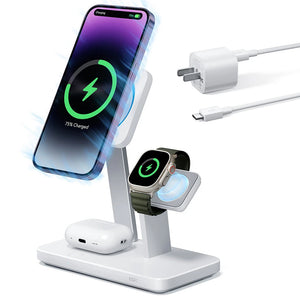
High‑quality video, wireless mics, and lights can drain your battery fast on shoot days. A compact 3‑in‑1 wireless charging station, such as the 25W Wireless Charging Station with CryoBoost, lets you top up your phone and other devices between locations. It’s designed to charge while running cooler over long sessions to keep performance stable during heavy use.

|
Feature |
Description |
|
Charging Time |
0 to 60% iPhone 17/ 17 Pro in 30 minutes (Tested) |
|
Temperature |
10.8° F cooler than other chargers |
|
AI-Powered Algorithm |
32-bit processor for controlled charging |
The "Elite Director" Kit (The Ultimate Production Rig)
For creators who treat their smartphone as a true “A‑camera” for cinematic stories, the “Elite Director” kit adds more specialized gear. A flagship phone like the iPhone 17 Pro Max, paired with anamorphic lenses, gives you wide, dramatic frames that feel closer to traditional cinema. These professional cages let you mount high‑quality microphones and grips, while external SSD storage keeps high‑bitrate footage safe during long shoot days.
On set, an iPad becomes your mobile studio for script notes and rough edits. The Shift Magnetic Case lets you mount your iPad to compatible metal stands and a fridge in a studio, keeping it visible and secure while you work. Also, the Shift iPad Keyboard Case adds a laptop‑style keyboard and trackpad, so you can jump between playback and file management without carrying a laptop.

|
Feature |
Shift Magnetic Case |
Shift Keyboard Case |
|
Protection |
Dual back case and front cover, 360° protection |
Reinforced Air Guard corners for scratches and impacts |
|
Viewing Angles |
9 viewing angles, 6 viewing, 3 writing |
20°–75° landscape stand for multiple uses |
|
Weight |
Lightweight back case used |
20% lighter than others |
|
Extras |
Fridge mount magnetic attachment |
Multi-functional trackpad |
The Post-Production Workflow: Phone vs. iPad vs. Desktop
Editing is where your raw clips turn into a finished story, whether you work on your phone, iPad, or desktop. Each device plays a different role, from quick social posts to full projects with sound design and advanced effects. Let’s walk through how these options fit together and when to use each one.
Mobile Editing: Fast Results on Your Phone
On mobile, apps like CapCut and Final Cut Camera focus on speed and instant sharing for Shorts, Reels, and TikToks. You can trim clips, add simple transitions, drop in music, and post within minutes of shooting. This stage suits creators who need a fast turnaround and want to test ideas before investing more time in editing.

iPad Editing: The Professional Middle Ground
On the iPad, apps like DaVinci Resolve and LumaFusion offer more detailed control over color, audio, and text than a phone. A larger screen makes it easier to see your timeline, fine-tune cuts, and judge color and exposure accurately. In this case, the Rebound Magnetic Keyboard Case with a trackpad helps via real keys and precise cursor control in tight color grading and exact timeline trimming.

Desktop Editing: Heavy Lifting and Long Projects
Desktop software like Premiere Pro works best for long-form content, multi-layer edits, and complex VFX or motion graphics. You can manage bigger timelines, multiple audio tracks, and higher-resolution footage without feeling cramped or slowed down. This level is ideal when you are finishing documentaries, commercial work, or any project that needs the most power and flexibility.

Pro Tips for Better Vlogging (The "Director's" Secrets)
Even with great gear, small habits set casual vlogs apart from clips that feel closer to real directorial work. Check out the tips below to quickly improve your videos without changing your entire setup.
1. Golden Hour Lighting: Try to film around sunrise/sunset, when soft light flatters faces and reduces harsh shadows.
2. Treat Audio Separately: Use an external mic whenever possible, because wind and noise ruin otherwise strong footage.
3. Protect Your Monitor: A good screen protector keeps your screen clean, as cracks can make framing difficult.
4. Guard Your Lenses: Keep lenses clean and covered, since dust and cracks can ruin sharp detail.
5. Plan Simple Shots: Consider angles before pressing record to make each clip feel more intentional.
Final Verdict
In conclusion, this guide shows how to turn your smartphone into a vlogging kit that fits different budgets and goals. By choosing the right phone, smart accessories, and a mobile-to-desktop workflow, you stay ready to create. Ready to build your director’s kit? Explore the ESR MagSafe ecosystem and iPad productivity accessories to turn your smartphone into a cinema-ready powerhouse.
You may also ask
My phone overheats and starts dropping frames when I’m shooting in 4K or 8K. How can I fix this?
Lots of creators run into this issue—shooting 4K or 8K pushes your phone’s processor to its limit, causing it to overheat and drop frames. Here’s what works: during breaks, use a charging stand with active cooling, like the ESR CryoBoost series. Its built-in fan cools your phone while it fast-charges, so by the time you’re ready for the next take, your device is cool enough to avoid that annoying overheating warning.
With the S26 Ultra and iPhone 17 featuring tougher glass, do I still need a case?
Modern phone glass is way stronger than it used to be, but if you’re a vlogger, a case isn’t just for drop protection—it’s about making your life easier. Go for a magnetic case with a built-in Stash Stand; it lets you prop your phone up anywhere for hands-free selfies or TikTok shots. And the MagSafe-compatible magnets let you snap it onto tripods or car mounts in seconds—way more efficient than going caseless.
How do I see my screen clearly when shooting in direct sunlight?
Dealing with glare outdoors is such a pain when you’re shooting. Cranking up the brightness helps, but your best bet is an anti-reflective screen protector, like the ESR Armorite series. It not only protects your screen from scratches and grit when you’re out and about, but the low-reflection coating cuts down glare so that you can actually check your framing and exposure even in midday sun.
Will MagSafe accessories interfere with my phone’s stabilization (OIS or EIS)?
Nope, they won’t—at least not if you’re using high-quality ones. Good magnetic accessories are designed to ensure their magnetic fields don’t interfere with your phone’s OIS (Optical Image Stabilization) sensors or gyroscopes, especially on flagship phones. Stick with a trusted brand like ESR—their stuff is rigorously tested, so you get the convenience of magnetic mounting without ruining your smooth footage.
Why isn't my external microphone picking up any sound on my phone?
If your external mic isn’t picking up sound, it’s almost always a problem with the connector or app permissions. First, double-check if your mic uses a TRS or TRRS plug—you might need an adapter. The bigger tip, though: the default camera app can be finicky. Try using pro apps like Final Cut Camera or Filmic Pro. They let you manually select your audio source and monitor levels in real time, so you won’t end up with a great video with no sound.


