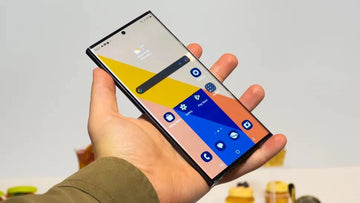




This isn’t just another yearly upgrade. When Samsung dropped the Galaxy S26 Ultra, the tech community held its collective breath—not for the cameras, and not for the new titanium-aluminum hybrid frame—but for a feature that has been the "holy grail" of mobile displays for a decade: Hardware-level Privacy Display.
If you’re reading this, you’ve likely already spent (or are about to spend) $1,300 on what is arguably the most advanced piece of consumer glass on the planet. Naturally, your first instinct is to protect it. But before you go and buy that generic "privacy screen protector" that’s been sitting in your Amazon cart, stop. You are about to make a mistake that could ruin the very best part of your new phone.
In this deep dive, we’re going to look at the real-world performance of the S26 Ultra’s privacy features, why the traditional privacy film industry is currently in a panic, and why the S26 Ultra needs the ESR Armorite® Pro Corning® Series as the only logical choice for your 2026 flagship setup.
The "Death" of the Tinted Film: Understanding the S26 Ultra’s Privacy Display
For years, privacy was a physical compromise. If you didn't want the person next to you on the bus reading your emails, you had to apply a thick, dark, micro-louvered film. It made your screen look like a grainier version of a 2010 ATM.
As seen in the recent SuperSaf unboxing (which hit over 73,000 views within hours of the launch), Samsung has fundamentally changed the game. At the 03:42 mark of his review, Saf demonstrates the world’s first mobile Privacy Display.

This Isn't Software; It's Physics
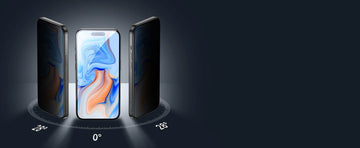
Samsung’s "Privacy Mode" (which uses Flex Magic Pixel technology) operates at the pixel level. By physically narrowing the OLED stack's light-emission angle, the phone can effectively "turn off" the view for anyone standing at a 45-degree angle.
-
The Big Advantage: It’s toggleable. You don't have to watch Netflix with a dark screen. You turn it on when you need it—like when you're using a banking app or in a crowded elevator—and you turn it off when you want the full 2,600 nits of brightness.
-
The Real-World Test: Official Samsung demos and creators like Karl Conrad have shown that even on a bright subway, the "Subway Mode" (as some call the privacy toggle) makes the screen appear almost completely black to bystanders while remaining crisp for the user.
If the phone does the work for you, adding a physical privacy film isn't just redundant—it’s actually a step backward for your tech.
The "Hidden Tax" of Physical Privacy Protectors: Why Your Eyes Are Screaming
Let’s get real about what a physical privacy protector actually does to your phone. It’s essentially a pair of permanent sunglasses for your device.
1. The 30% Brightness Tax
Standard privacy protectors work by blocking light. Testing by independent labs has consistently shown that these films reduce light transmission by anywhere from 25% to 35%. Because the S26 Ultra’s display is its crowning jewel, covering it with a film that blocks a third of its light is like buying a Ferrari and then putting a limiter on it that restricts you to 40 mph.
To compensate for the darkness, most users crank their brightness up to 80% or 90%. This leads to two major issues:
-
Battery Death: Your phone is working 30% harder just to show you the same image.
-
OLED Burn-in: Running an OLED panel at max brightness for extended periods is the fastest way to permanent screen damage.
2. The Clarity Crisis (Digital Eye Strain)
Ever noticed how physical privacy films make the screen look "sparkly" or "grainy"? That’s the micro-louvers interfering with the pixel grid. On a high-PPI (Pixels Per Inch) device like the S26 Ultra, this creates a "moiré effect" that is brutal on the eyes. Your optic nerve is constantly trying to resolve the image through a physical grid, which can lead to Digital Eye Strain and tension headaches.
3. Killing the Anti-Reflective Coating
Samsung spent millions developing Gorilla Armor 2 with Corning to ensure the S26 Ultra has the industry's lowest reflectivity. A traditional plastic-based privacy film adds a layer of high-gloss glare. Suddenly, you’re back to seeing your own reflection in the screen every time you’re outside.
The Community Verdict: What the Pro Reviews Are Saying
The shift in consumer sentiment is already visible on Reddit and YouTube. In his "Privacy Display Tested" video, SuperSaf noted that the built-in feature is "an absolute game-changer." The general consensus among those who have actually held the device is that the era of the "tinted film" is over.
Users are reporting that the built-in feature is effective for 95% of daily use cases. The only thing left to worry about isn't privacy—it's protection. Drops and scratches remain a serious threat. But since we no longer need the "dark tint," we can finally go back to what we all actually want: High-Definition, crystal-clear glass.

The Professional Solution: Why the ESR Armorite® Pro is the S26 Ultra’s Best Friend
Since the S26 Ultra handles privacy through its hardware, your job as a user is simply to protect that hardware without getting in its way. This is where the ESR Armorite® Pro Corning Series comes in.
If you are moving away from the "privacy film" era, you need the clearest glass possible. Here is why this specific Corning screen protector is the gold standard for 2026.

Authentic Corning® Glass
Most screen protectors use "Aluminosilicate glass" from generic factories. ESR uses authentic Corning™ Glass. Why does that matter? Because it’s the same material science used in the phone's native screen.
-
95% Optical Transmittance: It is virtually invisible. You get the full HDR10+ color range and the peak 2,600-nit brightness that you paid for.
-
Toughness: Tested to withstand over 110 lbs of pressure. This is the difference between a "shattered screen" and a "shattered protector" when your phone hits the pavement.
A Marriage of Form and Function: The ESR Samsug Cases
A screen protector is only as good as the case it lives with. We’ve all had that annoying experience where a case pushes the edges of the screen protector up, creating bubbles.
ESR has solved this with a unified ecosystem for the S26 Ultra:
-
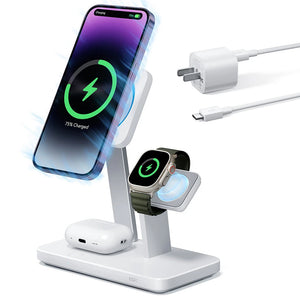
The Crystal Clear Hybrid Case: For those who want to show off that new Cobalt Violet or Titanium White finish. It features a built-in stash stand that doesn't interfere with MagSafe/Qi2.2 charging.
-
The Tough Armor Kickstand Case: For the power user. It offers military-grade drop protection with a reinforced frame that perfectly aligns with the Armorite® Pro glass.
-
Edge-to-Edge Precision: Both cases are designed with a "zero-gap" fit. The glass extends to the edge of the screen, where it meets the case, preventing dust or lint from getting trapped in the corners.
The Ultimate 2026 Protection Bundle
If you want to save yourself the headache of buying parts separately, the S26 Ultra Hybrid Protection Bundle is the way to go. It includes the Armorite® Pro glass and the Hybrid Stand case. It’s a "set it and forget it" solution that keeps your phone in mint condition throughout its 7-year update cycle.

Final Verdict: Clarity is the New Privacy
The Samsung Galaxy S26 Ultra is a sophisticated machine. Treating it with a $10 tinted privacy film is like putting cheap, low-octane fuel in a supercar.
The choice is simple:
-
Use Samsung’s built-in Privacy Display to protect your data when you're in public.
-
Use an ESR HD Corning® Protector to protect your screen from the world.
By separating "Privacy" (handled by the phone) from "Protection" (handled by ESR), you get the best of both worlds: a screen that is invisible to others when you want it to be, but remains the most beautiful, vibrant, and indestructible display in your pocket at all times.
Ready to gear up? Check out the ESR S26 Ultra Collection and make sure your new flagship is protected the right way.